For Game Masters who can run a table but don't always have time to build the world around it.

Run the table. We'll hold the world.

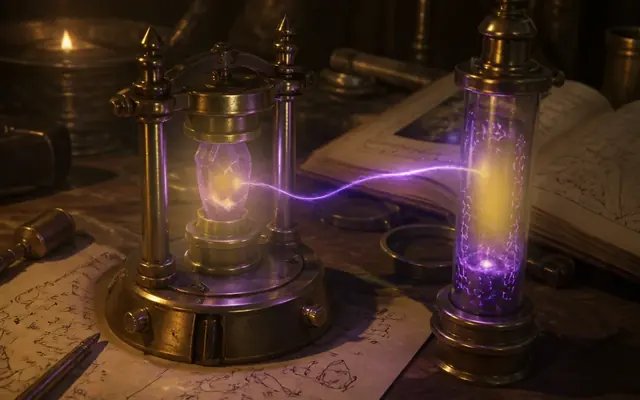
Throughline sits behind your table live. It listens, thinks several scene-beats ahead, and draws storyboards of what your players will encounter if they take the path they're leaning toward. When they go somewhere else, you improvise. Throughline reorganizes around what just happened and a new storyboard arrives in seconds. The part of the game your players see is still all you.

Who this is for. And who it isn't.

Throughline is for Game Masters who are strong on the social side of the table. Voicing NPCs, improvising, narrating, keeping the energy up. What's harder for them is what happens between sessions: long-arc planning, world canon, callback discipline, NPC consistency across months of play. Plus the in-session work of holding a cohesive narrative together when your players do something completely unexpected. Throughline takes both off your plate, so you can show up to the table doing the part you're already good at.

If you're already a great Game Master who enjoys deep prep and does it well, Throughline probably isn't for you. The product is built to raise the floor for people who'd love to run something deeper than they have the time or the practice to build alone. It isn't trying to replace the craft of someone who's already there.

How a session goes. Setup. Listen. Glance.

  1. 01

    Set up the campaign.

    Tell Throughline about your players and your table. Then describe the world: a homebrew in any depth, or a setting from a book, show, or game you love. After a couple of minutes of planning, you have an opening narration to read aloud at the table and the first checkpoints ready.

  2. 02

    Run live. Throughline listens.

    You voice NPCs, the players make choices, you improvise. Throughline notices the plausible directions the table could go next and prepares the consequences before you need them.

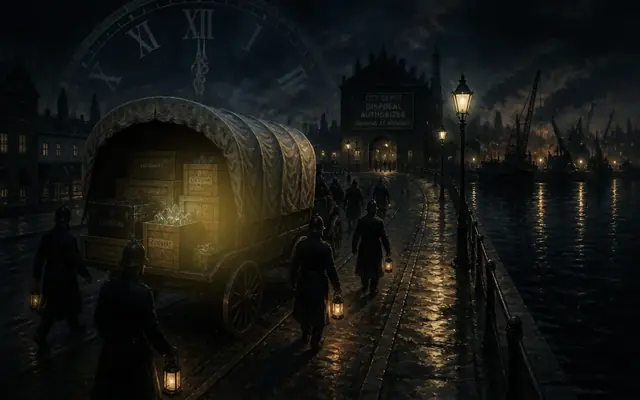
    Adventurers following a bell-ringer into a flooded under-market.
    if they follow him · under-market meeting
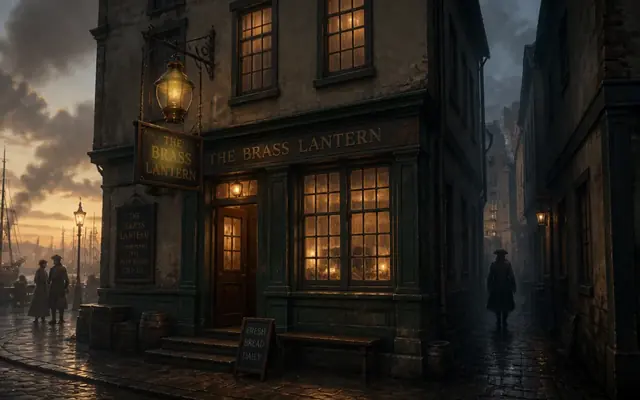
    Adventurers questioning a baker while an assistant hides a sealed letter.
    if they ask around · the baker lies
    Adventurers on a rainy rooftop finding a courier automaton.
    if they climb up · the courier waits
  3. 03

    Glance, steer, keep running.

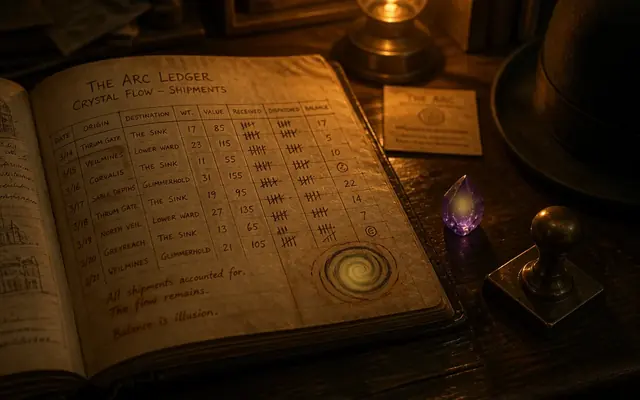
    Real images for scenes, with the load-bearing details highlighted. Diagrams for abstract things like court politics or faction relationships. Use what helps, ignore what does not, and steer Throughline when you want a different tone or destination.

How it works, in detail

Before the session

You start by telling Throughline about your players: names, classes, the kinds of scenes that light each one up, the kind of table you like to run. Then you describe the world. A homebrew in any depth, from a one-paragraph sketch to a full setting bible. Or pick a setting from a book, show, or game you love, and Throughline will work in that canon.

Throughline takes a couple of minutes to plan. When it's done, two things appear in your dashboard. First, an opening narration to read aloud at the table: three or four paragraphs that put the players in the scene. Second, the first checkpoints, depicting where the opening could land in the fiction. You're ready to start.

During the session

Read the narration. The players say what they do. You run the table in your own words.

Throughline is listening through your microphone the whole time, transcribing in the background. While the table plays, Throughline is drafting the next checkpoints — one branch per plausible next player action, depicting what your players will encounter if they take that path. A frame might establish the room, show the emotional pressure, or isolate the clue your players are likely to reach for. When the next beat is more about who's aligned with whom or what's politically at stake, the checkpoint comes as a diagram instead: nodes for the people, lines for the relationships, labels for what's been said and what's been concealed.

When the scene reaches a natural transition point, you glance at the dashboard and use what helps. If your players take one of the prepared branches, Throughline hears that and starts planning from the branch they actually entered. If they do something else, you keep running the table normally; Throughline reorganizes around what happened. If you want to steer tone or destination, send a note like "less combat, more politics" or "Liam wants to go back to the ship."

The cycle repeats for as long as you're playing. A typical 2.5-hour session goes through 20 to 25 scene-beats.

What Throughline tracks for you

Across the session and across sessions, Throughline holds:

  • Every NPC you've voiced and their established traits. Voice, motivation, scar, accent, whatever you and the players have made stick.
  • Every piece of canon the players have surfaced or you've revealed. Who knows what, what's been said in front of whom, which questions are still open.
  • Callback opportunities. Throwaway player lines from earlier sessions that could be paid off, backstory hooks that haven't been bitten yet.
  • Long arcs. The political moves of factions you've named, the slow consequences of choices the table made three sessions ago.
  • The lore you fed it at setup, plus everything the table has improvised since, treated as one coherent world.

Between sessions

Throughline saves your session transcript and the canonical state. When you start the next session, all of it is still there. The vampire NPC from session two has the same scar over the same eye. The bard's mentor still died in the temple fire. The faction the players slighted is still moving against them.

What Throughline doesn't do

Throughline never speaks to your players, never narrates at the table, never appears in any form your players see. You are still the only person at the table. Throughline doesn't run combat: you handle that with your own dice, your own rules, your own rulings. It doesn't manage initiative, calculate damage, or interpret the rulebook. It also doesn't replace your prep entirely. It replaces the long-horizon planning that's hard to do solo. The shorter "what's this NPC's name" or "what's in this dungeon room" prep, you can still do if you want, or skip and see what happens.

One-shots versus campaigns

One-shots are a single contained session: a heist, a mystery, a dungeon. They're heavily tested and run reliably. Multi-session campaigns work too but are still the frontier. We're learning what fails over weeks of play, and we recommend starting with a one-shot to see how the loop feels before committing to a longer run.

What this actually feels like. At the table.

You know that feeling of watching a show with a character who's calculating and politically savvy? Who takes actions that seem open-ended at the time, says things that seem just a little off, has an agenda you can't quite piece together? And then by the end of the season, you realize every move they made was coherent under a master plan you never saw forming. That is what running a Throughline session feels like.

Here's the version every Game Master has lived. Your players are in a tavern. You decide to plant something interesting in the innkeeper, a sparkle in her eye that doesn't quite read as natural. A player rolls Insight, and you narrate the unease: "The sparkle lasts a beat too long. She sees your expression change, and for a split second something flashes, anger maybe, then she covers it: 'Ale, was it?'"

That moment is great if you have a master plan behind it. If you don't, you just made a problem for yourself. You promised your players a thread, and a campaign full of threads pointing nowhere is the slop most multi-session games quietly slide into. Open-ended details, lovingly planted, leading nowhere.

With Throughline, this is the job. You keep planting open-ended details — the part you're good at. Throughline weaves the twenty or thirty things you've said across all your sessions into a narrative that resolves, paying off your improvised setups as if they were planned all along. This isn't magic. Good Game Masters do this. The difference is they can't do it on the fly. When your players do something completely unexpected mid-session, no human brain thinks fast enough to re-thread the cohesive plot from a running list of details. Throughline can think thousands of times faster, and it can weave in real time.

Throughline delivers the plan to you the only way it could fit at the table: as the storyboards you saw above, plus diagrams for the abstract material like court politics or faction webs. We tried text first. Game Masters sat at the table reading three-paragraph descriptions of a single NPC while their players watched in silence. Unworkable.

Imagine if you could prep for a couple of hours, but the way you prepped was a crystal ball that told you exactly what your players would do — every choice, every detour, every swerve — and you prepped to that. No matter what they did, they'd hit a narrative that ties together the way you'd hoped. That's the feel of a Throughline session. Without the prep.

Why Throughline was built. From Ted.

I'm Ted Shachtman, an educator and software engineer. I play Fabula Ultima and D&D, and I run games in both.

Ted here. I loved playing in my friend Ben's campaigns. Ben is one of the smartest people I've ever met, and he loved prepping. He'd build custom stories for me and my friends from scratch, and I got to grow up playing TTRPGs the way they're supposed to feel — open worlds, real narratives, the whole thing.

Then Ben moved away. Nobody in my friend group is remotely as good at it now, including me. Some of us try. None of us prep enough because we're all busy. It's a bummer.

The specific problem that pushed me to build Throughline: I told my friends I'd run a pirate campaign. Premise — they've been successful pirates on a crew for twenty years; the captain announces he's going to rob Smuggler's Bounty, a protected pirate cove where the penalty for robbing other pirates is death; the next morning, the captain takes a monkey as his wife. The captain is going insane. My friends were thrilled. I was thrilled. Then I tried to actually prep the campaign the way it deserved, and realized I couldn't.

After hitting that wall, I started wondering whether a tool could handle the parts I'm bad at — long-term planning and narrative coherence — and let me focus on the part I actually enjoy, which is running the table. It took a lot of iterations and some deep game-design insights. But that's what we built. A system that helps you be a better Game Master. Cheap enough to be worth it. Doesn't replace any humans (this matters to me). And fun to use.

Where the product is right now: 6 live playtests so far plus a lot of internal testing. One-shots have been reliable. Multi-session campaigns are still the frontier; we'd suggest starting with a one-shot.

Pricing during private playtest: Throughline is free for early testers right now. If you're invited off the waitlist, we'll send a 100% off discount code so you can run real sessions without paying while we're learning from playtests.

Read more about the design behind it →

Already invited?

Go straight to the Throughline app.

If you've been let in off the waitlist, sign in at the production dashboard with the same Google account you used for your invite.

Open app.throughline.gg

The waitlist is open. Limited intake.

We're recruiting about ten Game Masters for the next playtest round. Tell us where to write.